If you have spent any time around endurance athletes, fitness trackers, or longevity research, you have probably encountered the term VO2 Max. It shows up on smartwatches, in training plans, and in headlines about what predicts how long you will live. But most explanations either oversimplify it or bury it in exercise physiology jargon.
Here is what VO2 Max actually is, why researchers consider it one of the most important health metrics you can measure, and what you can do about yours.
VO2 Max, Explained Simply
VO2 Max stands for maximal oxygen uptake — the maximum amount of oxygen your body can absorb and use during intense exercise. It is measured in milliliters of oxygen consumed per kilogram of body weight per minute (ml/kg/min).
Think of it this way: your body runs on oxygen. Every cell needs it to produce energy. VO2 Max tells you how efficiently your cardiovascular system — your heart, lungs, blood vessels, and muscles — can deliver and use that oxygen under peak demand.
A higher VO2 Max means your body is more efficient at the most fundamental thing it does: converting oxygen into energy. A lower VO2 Max means your system has a bottleneck somewhere — in cardiac output, lung capacity, oxygen-carrying capacity of the blood, or the muscles’ ability to extract and use oxygen.
Why VO2 Max Matters Beyond Athletics
For decades, VO2 Max was considered a metric for elite athletes. Runners wanted to know theirs. Cyclists obsessed over it. But recent research has moved VO2 Max from the sports performance conversation into the longevity and general health conversation — and the findings are striking.
It Predicts Longevity Better Than Almost Anything Else
A landmark study published in JAMA Network Open analyzed over 750,000 exercise tests and found that cardiorespiratory fitness — measured by VO2 Max — was a stronger predictor of mortality risk than smoking, diabetes, or heart disease. People in the lowest fitness category had a five times higher risk of death compared to the most fit group.
Dr. Peter Attia, one of the most prominent voices in longevity medicine, has called VO2 Max “the single most powerful marker for longevity” and recommends that everyone over 40 know their number and actively work to improve it.
It Reveals Your Functional Capacity
VO2 Max is not just about how fast you can run a 5K. It is a proxy for how much physical reserve you have for daily life — climbing stairs, carrying groceries, playing with your kids, recovering from illness or surgery. As you age, your VO2 Max naturally declines by roughly 10 percent per decade after age 30. If you start from a low baseline, that decline can push you below the functional threshold needed for independent living much sooner than necessary.
It Responds to Training
Unlike some genetic markers, VO2 Max is highly trainable. Structured exercise — particularly high-intensity interval training and sustained aerobic work — can improve VO2 Max by 15 to 20 percent or more. That improvement translates directly to real-world capacity and reduced health risk.
What Determines Your VO2 Max?
Several factors influence your VO2 Max, and understanding them helps explain why testing matters more than guessing:
Cardiac output is how much blood your heart can pump per minute. A stronger heart pumps more blood per beat, delivering more oxygen to working muscles.
Lung capacity and efficiency determine how much oxygen enters your bloodstream with each breath. While lung volume is largely fixed by genetics and body size, the efficiency of gas exchange can be influenced by training.
Hemoglobin and blood volume affect how much oxygen your blood can carry.
Mitochondrial density in muscles determines how effectively your muscles can extract and use the oxygen delivered to them. Endurance training increases mitochondrial density, which is one of the primary mechanisms behind VO2 Max improvement.
Age, genetics, and sex all play roles. Men typically have higher VO2 Max values than women due to differences in body composition and hemoglobin levels. VO2 Max peaks in your mid-20s and declines with age — but the rate of decline is heavily influenced by activity level.
How Is VO2 Max Tested?
Estimated VO2 Max
Most fitness trackers and smartwatches provide a VO2 Max estimate based on heart rate data during exercise. These estimates use algorithms that correlate heart rate, pace, and other variables to predict your VO2 Max. They can be useful for tracking trends over time, but they are estimates — often with error margins of 10 to 15 percent or more.
Direct VO2 Max Testing
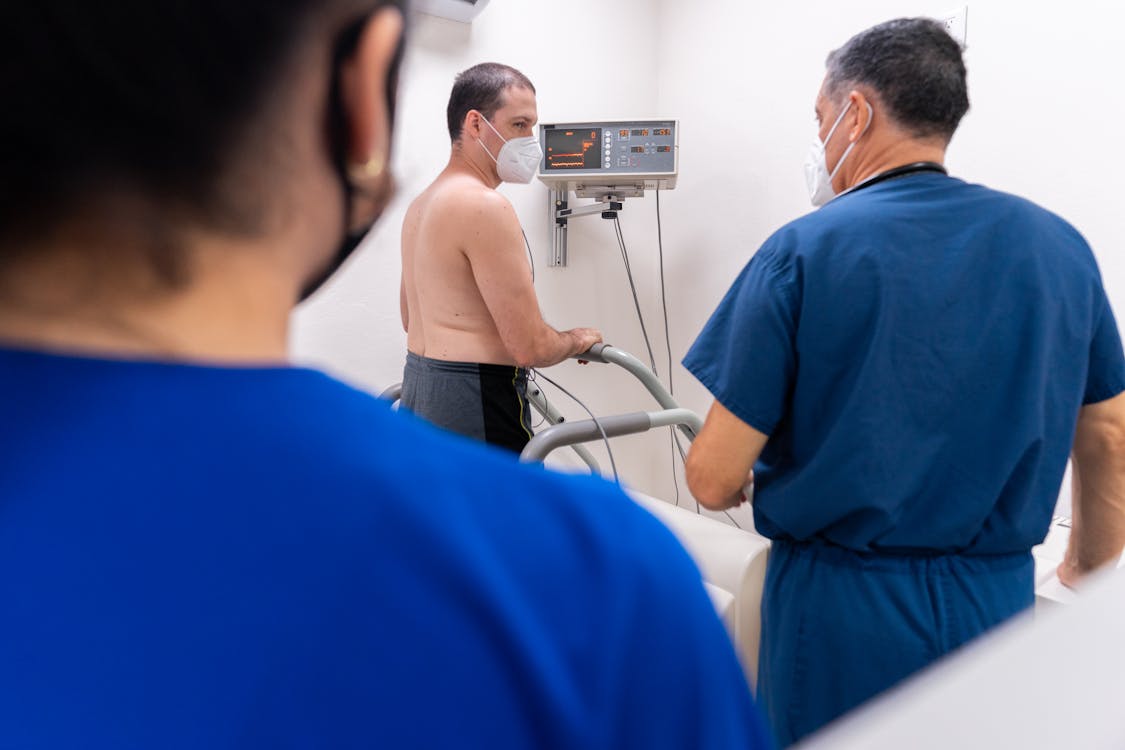
A direct VO2 Max test — also called a cardiopulmonary exercise test or metabolic test — measures your actual oxygen consumption in real time while you exercise at progressively increasing intensity. You wear a mask connected to a metabolic analyzer while running on a treadmill or cycling on an ergometer. The test continues until you reach your physiological maximum.
This gives you your actual VO2 Max, not an estimate. It also provides additional data points including your ventilatory thresholds — the intensity levels where your body shifts from aerobic to anaerobic energy production — which are critical for setting effective training zones.
What Is a Good VO2 Max?
VO2 Max values vary by age and sex. For men, below 35 ml/kg/min is considered poor, 40–48 is good, and above 55 is elite. For women, below 28 is poor, 33–40 is good, and above 48 is elite.
For longevity purposes, research suggests that being in at least the top 25 percent for your age group significantly reduces all-cause mortality risk. The data shows that moving from the bottom quartile to even the average range produces the single largest reduction in death risk — larger than quitting smoking or controlling blood pressure.
How to Improve Your VO2 Max
High-intensity interval training (HIIT) — structured intervals at 85 to 95 percent of maximum heart rate, with recovery periods. This is the most time-efficient way to drive VO2 Max improvement.
Zone 2 training — longer sessions at moderate intensity where you can still hold a conversation. This builds mitochondrial density and aerobic base.
Consistency over intensity — training four to five days per week with a mix of intensities produces better long-term results than sporadic high-intensity efforts.
Strength training — resistance training supports VO2 Max indirectly by improving muscle efficiency and preventing the lean mass loss that accelerates VO2 Max decline with age.
Know Your Number. Then Improve It.
Your VO2 Max is arguably the most important fitness metric you are not tracking. It tells you where you stand relative to your peers, how your cardiovascular system is aging, and — according to a growing body of research — how long you are likely to live.
Estimating it from a watch is a start. But if you want real data that drives real decisions, a direct VO2 Max test gives you the clinical-grade number and the training zone data to actually do something about it.
Plus10 offers direct VO2 Max testing in Flower Mound, TX — clinical-grade metabolic analysis with a protocol designed for real-world application, not just a number on a report. Your results include personalized heart rate training zones based on your ventilatory thresholds, so you leave with data you can immediately use.
View pricing and membership options or email info@plus10life.com to book your test.
Plus10 is located at 400 Gerault Road, Flower Mound, TX 75028.