You step on a body fat scale at the gym or at home, and it tells you your body fat percentage. Maybe 22 percent. Maybe 30. You feel good or bad about the number, adjust your diet or training accordingly, and move on.
But here is the problem: that number might be off by 5 to 8 percentage points. And if you are making decisions about your nutrition, training, or medical care based on a number that inaccurate, you are not optimizing — you are guessing.
This is why DEXA scanning has become the gold standard for body composition testing, and why the difference between a $30 bathroom scale and a clinical-grade DEXA scan matters more than most people realize.
How Body Fat Scales Work (And Where They Fall Short)
Most consumer body fat scales use a technology called bioelectrical impedance analysis (BIA). The scale sends a small electrical current through your body and measures how quickly it returns. Since fat tissue and lean tissue conduct electricity differently, the scale uses the resistance measurement to estimate your body composition.
The concept is sound. The execution is where problems emerge.
Hydration dramatically affects results. Drink two glasses of water before stepping on the scale and your body fat reading can shift by 2 to 3 percentage points. Dehydrated from a workout? The scale may overestimate your body fat. BIA is measuring electrical conductivity, and water is a major conductor.
The measurement path is limited. Most bathroom scales only send the current through your legs — from one foot to the other. This means the scale is primarily measuring your lower body composition and estimating the rest. Handheld devices do the same thing but through your arms. Neither captures a complete picture.
Algorithms vary between manufacturers. Two scales in the same bathroom can give you different body fat readings because they use different proprietary algorithms to interpret the same basic impedance data. There is no standardization.
The error margin is significant. Published research on BIA accuracy shows error margins of plus or minus 3 to 8 percent body fat in typical conditions. For someone whose actual body fat is 20 percent, a BIA scale might read anywhere from 12 to 28 percent. That is not a useful range for making decisions.
What a DEXA Scan Actually Measures
DEXA stands for Dual-Energy X-ray Absorptiometry. It was originally developed for measuring bone mineral density but has become the clinical gold standard for body composition analysis.
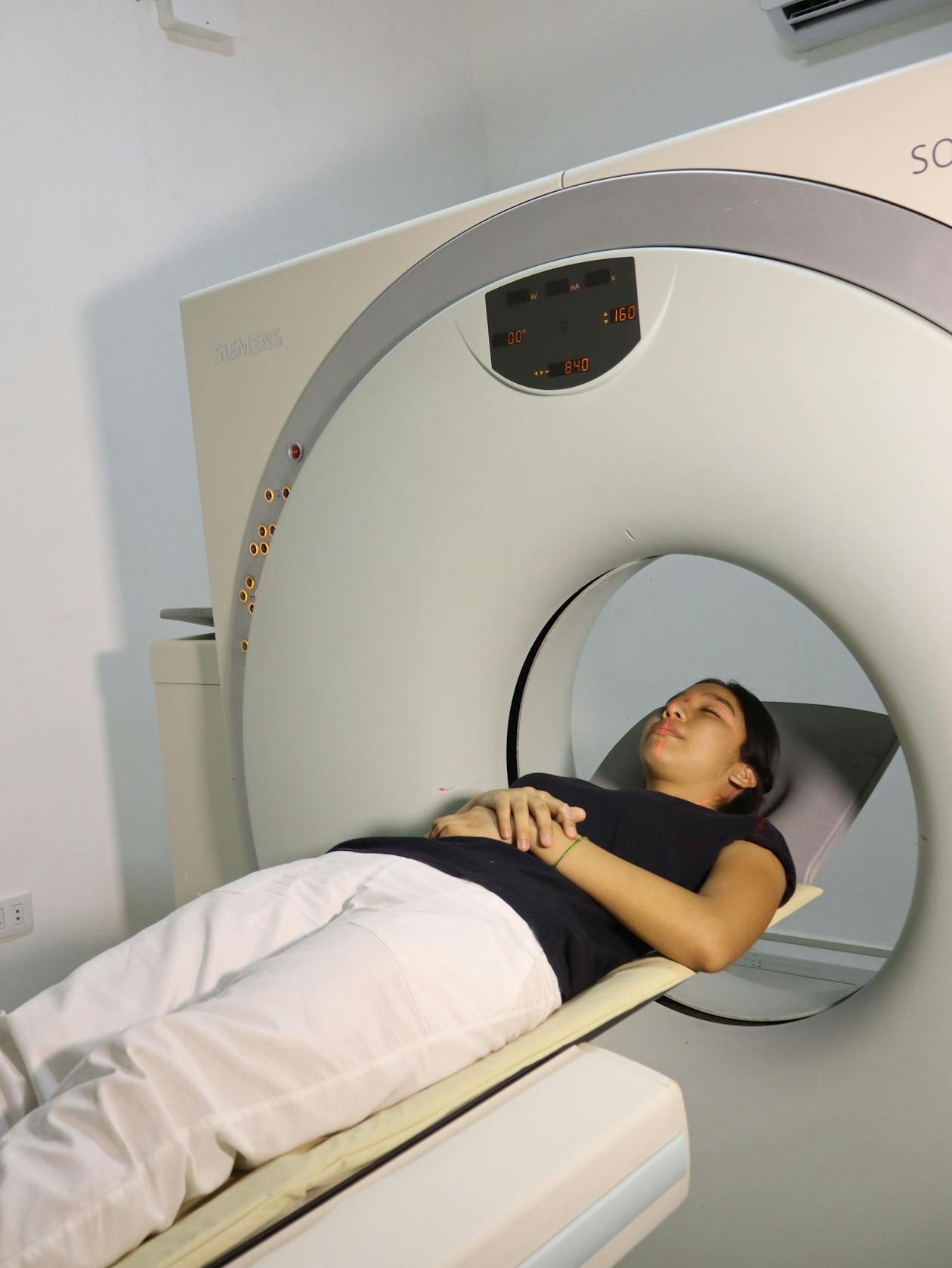
During a DEXA scan, you lie on a table while a low-dose X-ray arm passes over your entire body. The scanner uses two different X-ray energy levels to differentiate between three tissue types: bone mineral content, lean soft tissue (muscle, organs, water), and fat tissue.
The result is a complete, region-by-region map of your body composition — not just a single number, but a detailed breakdown showing exactly where you carry fat and muscle, and how much of each you have in every region of your body.
What DEXA Tells You That a Scale Cannot
Total body fat percentage with an accuracy of 1 to 2 percent — compared to 3 to 8 percent for BIA scales.
Regional fat distribution. DEXA shows you exactly how much fat you carry in your arms, legs, trunk, and android (abdominal) region. This matters because visceral fat — fat stored around your organs in the abdominal area — is far more metabolically dangerous than subcutaneous fat elsewhere. Two people with identical total body fat percentages can have very different health risk profiles based on where that fat is distributed.
Lean mass by region. Are your legs significantly stronger than your upper body? Is there a meaningful asymmetry between your left and right sides? DEXA quantifies this, which is valuable for injury prevention, training program design, and rehabilitation monitoring.
Bone mineral density. DEXA is the diagnostic standard for osteoporosis and osteopenia screening. This is especially relevant for women over 50, anyone with a family history of bone loss, and athletes in sports with high fracture risk.
Visceral adipose tissue (VAT) score. This is arguably the most clinically relevant number on a DEXA report. VAT is the fat packed around your internal organs, and elevated VAT is directly linked to increased risk of type 2 diabetes, cardiovascular disease, and metabolic syndrome — even in people whose total body fat percentage looks acceptable.
When Accuracy Changes Everything
Consider a few scenarios where the difference between a BIA estimate and a DEXA measurement actually matters:
You are on a GLP-1 medication for weight loss. You are losing weight, but are you losing fat, muscle, or both? A BIA scale cannot reliably distinguish between the two. A DEXA scan can — and if you are losing significant muscle mass along with fat, your program needs adjustment before you undermine your long-term metabolic health.
You are training hard but the scale is not moving. This is one of the most common frustrations in fitness. You might be gaining muscle and losing fat simultaneously — a body recomposition that is invisible on a weight scale and unreliable on a BIA scale. DEXA shows you exactly what is happening.
You are over 40 and want a health baseline. Knowing your true body fat percentage, visceral fat level, bone density, and lean mass distribution gives you a comprehensive snapshot of where you stand — and a precise benchmark to measure against over time.
You are an athlete optimizing performance. Small changes in body composition — even 1 to 2 percent shifts in body fat or lean mass — can meaningfully affect power-to-weight ratio, endurance, and recovery. BIA cannot detect these changes reliably. DEXA can.
How Often Should You Get a DEXA Scan?
For most people pursuing fitness or health goals, a DEXA scan every 8 to 12 weeks provides the right frequency for tracking meaningful changes. Body composition shifts slowly — scanning more frequently than every 6 to 8 weeks is unlikely to show statistically significant changes and can lead to overreacting to normal fluctuations.
An effective protocol is to get a baseline scan at the start of a new program — whether that is a training plan, a nutrition change, or a medical weight loss program — and then follow up at regular intervals to see what is actually working.
What to Expect During a DEXA Scan
A DEXA scan is one of the simplest tests in clinical fitness. You lie still on a padded table for about 7 to 10 minutes while the scanner arm passes over you. There is no injection, no fasting requirement, no exercise involved. The radiation exposure is extremely low — roughly equivalent to the background radiation you receive during a cross-country flight.
Results are available immediately and include a detailed report showing your total and regional body composition, bone density, and visceral fat score.
Stop Guessing. Start Measuring.
Body fat scales have a role — they are inexpensive, convenient, and useful for rough trend tracking if you weigh yourself under identical conditions every time. But if you are making real decisions about your training, nutrition, or health based on body composition data, you need data you can trust.
A DEXA scan gives you that. Not an estimate. Not an algorithm’s best guess. An actual, clinical-grade measurement of exactly what your body is made of and where.
Plus10 offers DEXA body composition scanning in Flower Mound, TX — with immediate results, a detailed regional breakdown, visceral fat scoring, and the ability to track your progress over time with precision.
View pricing and membership options or email info@plus10life.com to book your scan.
Plus10 is located at 400 Gerault Road, Flower Mound, TX 75028.