You Just Got Your DEXA Results. Now What?
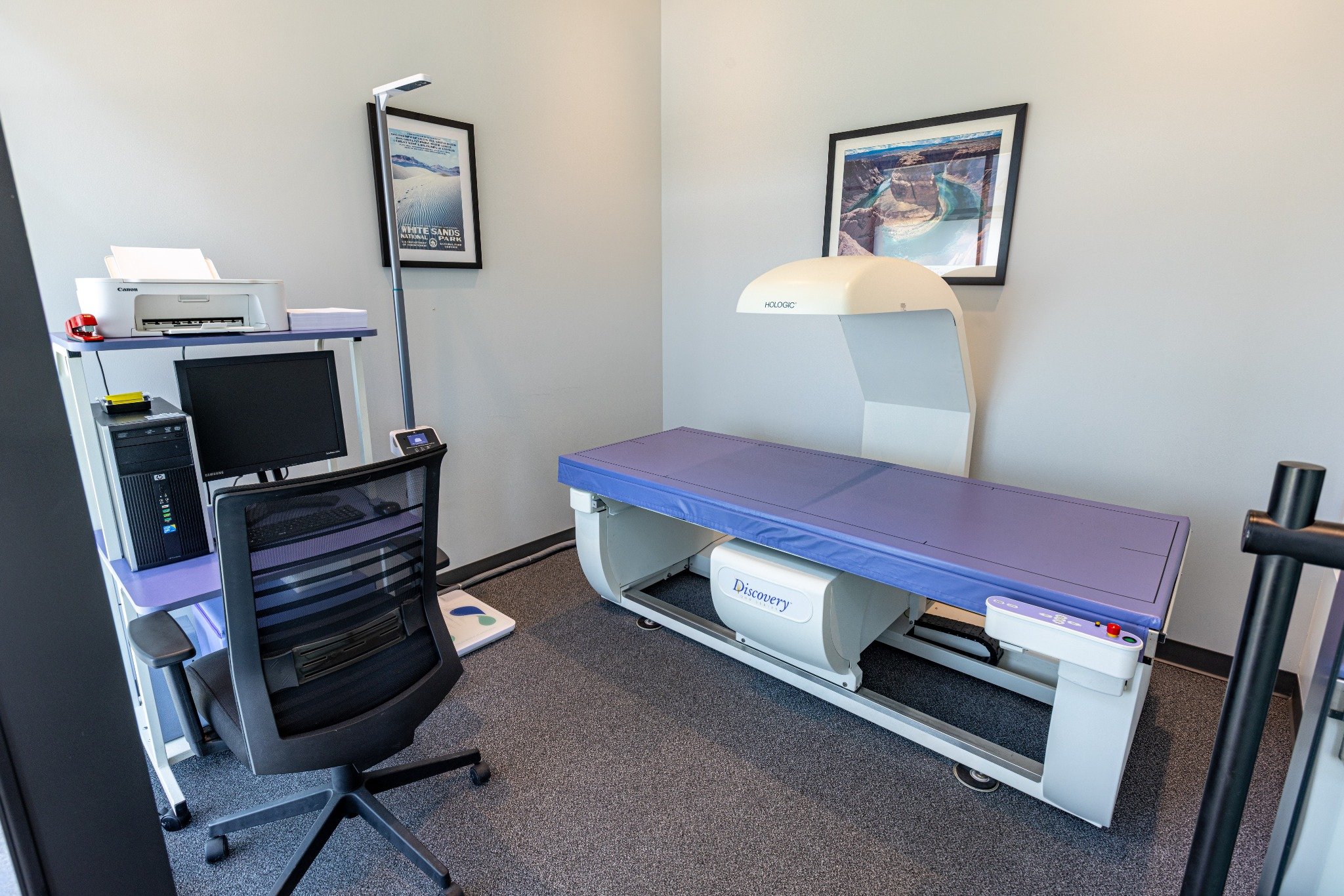
You step out of the DEXA machine at Plus10. A technician hands you a printout—or emails you a PDF. It’s a full-color scan of your body, broken into regions, covered in numbers and abbreviations you’ve never seen before.
Lean Mass. Fat Mass. Z-Score. Visceral Fat. T-Score. Percentiles.
If you’re staring at that printout thinking, “What does this actually mean?”—you’re not alone. Most gyms don’t use DEXA, so there’s no frame of reference. Most health practitioners don’t explain it.
This is where data-driven health differs from typical fitness. This is not your typical gym. We measure, we explain, we help you understand what the numbers mean for your aging, your performance, your longevity.
The Three Big Buckets: What DEXA Actually Measures
DEXA (Dual Energy X-ray Absorptiometry) is a low-radiation X-ray scan that measures bone mineral density and body composition. It does three things:
- Measures your lean mass (muscle, organs, water, connective tissue)
- Measures your fat mass (total body fat and regional distribution)
- Measures your bone density (strength and fracture risk)
Section 1: Body Composition — The Numbers That Matter Most
Lean Mass (LM) / Total Lean Mass (TLM)
This is the total weight of everything in your body that isn’t fat: muscle, organs, water, connective tissue, bone (though bone density is reported separately).
What it means: Lean mass is the primary driver of metabolic health, functional strength, and longevity. More lean mass = higher resting metabolic rate, better glucose handling, better injury resilience, better aging.
How to read it: Your DEXA report shows total lean mass (in pounds or kg) and a regional breakdown: arms, legs, trunk, android (belly region), gynoid (hip/thigh region).
Action item: Your lean mass should be stable or increasing year-over-year if you’re strength training. If it’s declining 1–2 lbs per year without intentional training, that’s sarcopenia (age-related muscle loss) at work. Strength training reverses this trend.
Fat Mass (FM) / Total Fat Mass (TFM)
Total body fat, measured in pounds or kilograms. Not all fat is bad—you need fat for hormones, insulation, and nutrient storage. But excess fat, especially visceral fat, correlates with metabolic dysfunction, inflammation, and disease risk.
Benchmark note: For longevity optimization, most research suggests men: 12–20% body fat, women: 18–28% body fat.
Action item: Fat mass should decrease with a caloric deficit + strength training. But if it’s decreasing too fast (more than 1–2 lbs per week), you’re likely losing muscle alongside fat. Slow the deficit.
Body Fat Percentage (%BF)
Calculated as: (Total Fat Mass ÷ Total Body Weight) × 100. A simple way to contextualize your fat mass.
Important caveat: Body fat percentage alone is not a longevity biomarker. A person at 22% body fat with low muscle mass and high visceral fat is at greater risk than someone at 28% body fat with high lean mass and low visceral fat. This is why DEXA is superior to BMI or simple body fat percentage. It shows the full picture.
Section 2: Visceral Fat — The Hidden Risk Factor
Visceral Adipose Tissue (VAT)
Visceral fat is the fat stored around your organs (liver, intestines, pancreas, heart). It’s metabolically active and inflammatory. It correlates with insulin resistance, metabolic syndrome, type 2 diabetes risk, fatty liver disease, cardiovascular inflammation, and dementia risk.
Healthy ranges (per research): Under 100 cm²: low risk. 100–160 cm²: moderate risk. Over 160 cm²: high metabolic risk.
Important note: You can have “normal” body weight and high visceral fat. This is sometimes called “skinny fat”—a person with low muscle mass, high body fat percentage, and elevated visceral fat despite a normal scale weight.
Action item: If your visceral fat is elevated, the fastest way to reduce it is a caloric deficit (ideally via diet), strength training (builds lean mass, displaces visceral fat), and reducing refined carbs and excess alcohol. A re-test DEXA in 12 weeks can show whether your protocol is working.
Section 3: Bone Health — The Z-Score and T-Score
Bone Mineral Density (BMD) / T-Score / Z-Score
DEXA also measures bone density, which predicts fracture risk and bone health trajectory.
T-Score: Compares your bone density to a healthy 30-year-old of the same sex. Above -1.0 = Normal. -1.0 to -2.5 = Osteopenia (low bone density). Below -2.5 = Osteoporosis (high fracture risk).
Z-Score: Compares your bone density to age-matched peers. Above 0 = Above average for your age. Below -1.5 = Below average for your age (may indicate accelerated bone loss).
What it means for aging: Bone density peaks at age 30 and declines thereafter. By 60, most people have lost 10–15% of peak bone mass. Strength training (especially loaded, impact activities) slows this decline.
Section 4: Regional Analysis — Where the Fat and Muscle Are
DEXA breaks down your body into regions: Arms, Legs, Trunk, Android Region (central/belly fat — high cardiovascular risk), and Gynoid Region (hip and thigh fat — lower risk).
Some people accumulate fat preferentially in certain regions. An “android” fat pattern (belly-dominant) is more metabolically harmful than “gynoid” (hip/thigh-dominant).
Action item: Use regional breakdowns to identify asymmetries (unbalanced muscle development), track regional fat loss, and validate whether your training is building muscle in target areas.
Section 5: Percentiles — How You Stack Up
Your DEXA report may include percentile rankings. Percentiles are useful for context, but they shouldn’t drive your goals. Just because you’re in the 75th percentile for body fat doesn’t mean you’re optimizing for longevity. The research on optimal body composition for longevity is different from population averages.
Example: Average 55-year-old American = ~35% body fat. Optimal for longevity = ~18–22% body fat. You can be “above average” and still aging poorly.
How to Use Your DEXA Results for Real Action
First DEXA (Baseline): Establish your baseline metrics. Identify any red flags: high visceral fat, low lean mass, low bone density. Set targets based on research and personal goals.
3–6 Month Re-test: Measure whether your training and nutrition strategy is working. Are you losing fat without losing muscle? Is visceral fat declining? Is lean mass stable or increasing?
Annual Re-test: Longer-term trend tracking. Ensure year-over-year improvements in body composition and bone health.
Real Example: How DEXA Reveals the Hidden Story
Client A — Scale Weight Alone: Month 0: 195 lbs. Month 6: 175 lbs. Down 20 lbs. Seems great.
Client A — With DEXA Data: Lost 3 lbs of muscle (bad) and 17 lbs of fat (good). Visceral fat improved but not as much as hoped. Insight: Training protocol isn’t optimized for muscle preservation.
Client B — Scale Weight Alone: Month 0: 195 lbs. Month 6: 175 lbs. Down 20 lbs. Seems great.
Client B — With DEXA Data: Gained 3 lbs of muscle (excellent) and lost 23 lbs of fat (excellent). Visceral fat down 40 cm² (major win). Insight: This protocol is working.
Same scale outcome. Completely different aging trajectory. This is why DEXA matters.
Your scale tells one story. Your DEXA scan tells the truth.
At Plus10, we use DEXA not as a one-time snapshot, but as the cornerstone of accountability. Baseline. Six-week check-in. Twelve-week assessment. We measure what matters: lean mass, fat mass, visceral fat, bone density.
Then we adjust your training and nutrition based on data—not guessing.
This is not your typical gym. This is science-driven body optimization.
Ready to understand exactly what your body composition looks like?
Book your DEXA scan today. We’ll walk you through every metric and build a 12-week protocol to shift your numbers in the direction of longevity.