
Visceral fat is the deep abdominal fat that surrounds your organs and increases the risk of heart disease, type 2 diabetes, and metabolic dysfunction. Learning how to reduce visceral fat requires more than cardio alone. Functional strength training improves muscle mass, insulin sensitivity, and metabolic health, making it a powerful, evidence-based strategy for long-term fat loss.
What Is Visceral Fat and Why Reducing It Matters
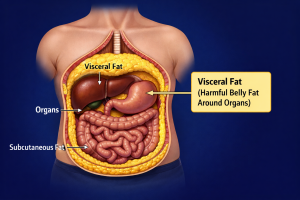
Visceral fat is not the same as the fat you can pinch under your skin. It sits deep within the abdomen, surrounding vital organs such as the liver and pancreas. Even individuals who appear lean can carry excess visceral fat, which is why waist size alone does not always reflect metabolic health.
High levels of visceral fat are strongly associated with insulin resistance, chronic inflammation, cardiovascular disease, and hormonal imbalance. Reducing visceral fat is therefore less about aesthetics and more about improving long-term health and reducing disease risk.
How to Reduce Visceral Fat Through Exercise
Exercise plays a critical role in reducing visceral fat, but not all exercise works the same way. While cardiovascular training helps increase daily calorie expenditure, it is not sufficient on its own for sustained visceral fat reduction.
Why Strength Training Is Essential to Reduce Visceral Fat
Strength training increases lean muscle mass, which raises resting metabolic rate and improves how the body handles glucose. This directly impacts visceral fat storage because insulin resistance is one of the primary drivers of fat accumulation around the organs.
Research consistently shows that resistance training can reduce visceral fat even when body weight does not change significantly. Multiple clinical and population studies summarized by the National Institutes of Health and Harvard Health indicate that resistance-based exercise improves insulin sensitivity and reduces harmful abdominal fat when performed consistently. This makes strength training especially valuable for adults who struggle with traditional weight-loss approaches.

How Functional Strength Training Helps Reduce Visceral Fat
Functional strength training focuses on movements that mirror real-life activities rather than isolated muscle exercises. These movements require coordination, stability, and the engagement of multiple muscle groups at once.
Because functional strength training places a higher demand on the nervous system and large muscle groups, it creates a greater metabolic stimulus. This mechanism is supported by exercise physiology research published in peer‑reviewed journals indexed on PubMed, showing improved glucose control and reductions in visceral adiposity with structured resistance training. This leads to improved insulin sensitivity, higher energy expenditure during and after workouts, and better long-term adherence.
Functional Strength Training vs Traditional Gym Workouts
Traditional gym routines often rely heavily on machines that isolate individual muscles. While these can build strength, they do not fully prepare the body for daily movement or produce the same metabolic response.
Functional strength training emphasizes squats, hinges, pushes, pulls, carries, and rotations. It prioritizes core stability over repetitive abdominal exercises and supports movement efficiency and joint resilience, which is especially important for adults aged 30–50.
Evidence-Based Training Principles to Reduce Visceral Fat
To reduce visceral fat effectively, training must follow clear principles rather than random workouts. Consistency is the most important factor. Two to four structured strength training sessions per week performed over months will outperform short bursts of extreme exercise.
Progressive overload, where resistance or complexity gradually increases, ensures continued metabolic adaptation without overtraining.

Functional Strength Training Movements That Support Visceral Fat Loss
Functional strength training prioritizes full-body movements such as squats, deadlifts, lunges, presses, rows, and loaded carries. These exercises demand high energy output and stimulate hormonal responses that support fat loss.
Core stability exercises, such as anti-rotation and bracing movements, are more effective for visceral fat reduction than traditional crunches because they train the body to stabilize during real-world movement.
Lifestyle Factors That Support Reducing Visceral Fat
Exercise alone is not enough to fully address visceral fat. According to evidence summarized by Harvard Health and the National Institutes of Health, sleep quality, stress regulation, and nutrition habits strongly influence visceral fat accumulation alongside training. Lifestyle factors play a major supporting role. Nutrition quality matters more than extreme calorie restriction, and adequate protein intake helps preserve muscle mass.
Poor sleep and chronic stress elevate cortisol, a hormone strongly linked to visceral fat storage. Excess alcohol intake is also associated with increased visceral fat accumulation, even in physically active individuals.
Who Functional Strength Training Is Best For
Functional strength training is particularly effective for overweight and obese adults who want to improve health without relying on unsustainable cardio routines. It is well suited for men and women aged 30–50 who are balancing work, family, and recovery demands.
Who Should Modify Functional Strength Training
Individuals new to exercise, those with joint limitations, or people returning from injury should modify intensity and movement selection. Professional coaching ensures exercises are progressed safely and matched to individual capability, which is especially important when the goal is long-term visceral fat reduction.

How to Reduce Visceral Fat Safely and Sustainably
Rapid weight-loss strategies often fail because they reduce scale weight without improving metabolic health. Functional strength training supports sustainable fat loss by improving how the body uses energy rather than simply forcing calorie deficits.
The most effective approach combines structured strength training, supportive nutrition habits, quality sleep, and stress management. This creates an environment where visceral fat reduction can occur naturally and be maintained over time.
Final Thoughts on How to Reduce Visceral Fat Long Term
For individuals seeking professional guidance, structured strength training programs and personalized coaching can significantly improve adherence and long‑term results. Programs that combine functional strength training, lifestyle coaching, and accountability are especially effective for adults aiming to reduce visceral fat safely.
If you are exploring professional support, Plus10 offers structured training and coaching services designed to help adults improve metabolic health, build strength, and reduce visceral fat through sustainable methods.
If your goal is to learn how to reduce visceral fat, functional strength training should be a cornerstone of your plan. It improves metabolic health, preserves muscle, and supports sustainable fat loss far better than cardio-only approaches.
When strength training is applied correctly, visceral fat reduction becomes a byproduct of improved overall health rather than a constant uphill battle.
Evidence-Based Resources
- National Institutes of Health (NIH): Research on visceral fat, insulin resistance, and metabolic health
- Harvard Health Publishing: Exercise, strength training, and abdominal fat reduction
- PubMed: Peer‑reviewed studies on resistance training and visceral fat reduction
Related Plus10 Resources
- Functional Strength Training Programs
- Fat Loss and Body Recomposition Coaching
- Personal Training and Health Assessments