Functional strength training is not about lifting heavier weights for the sake of it. Instead of chasing numbers, it focuses on building strength that directly improves how you move in real life. From standing up and carrying groceries to maintaining balance and posture as you age, in everyday situations, functional strength training exercises are designed to support everyday movement with purpose and efficiency.
What Is Functional Strength Training?
Functional strength training emphasizes multi-joint, real-world movement patterns rather than isolated muscle exercises. Rather than training muscles in isolation, the body is trained as an integrated system that mirrors how it naturally moves outside the gym. In practical terms,
- Multiple muscle groups working together
- Controlled movement through natural ranges of motion
- Balance, coordination, and core stability
As a result, the strength developed transfers directly into daily activities, reducing strain, improving efficiency, and lowering injury risk.
Why Real-Life Movement Matters More Than Gym Numbers
While traditional training often focuses on how much weight you can lift, in comparison, functional strength training prioritizes how well you move. Over time, poor movement patterns can lead to joint stress, muscle imbalances, and limited mobility. As a result,
By contrast, functional strength training exercises help:
- Improve posture and alignment
- Enhance balance and coordination
- Reduce the risk of everyday injuries
- Support long-term independence
Therefore, this type of training is especially valuable for adults who want strength that supports life, not just performance metrics.
Key Benefits of Functional Strength Training Exercises
1. Strength That Transfers to Daily Life
Functional strength training builds usable strength that supports tasks like lifting, carrying, reaching, and walking. In everyday life, Instead of training muscles in isolation, movements are trained as they naturally occur in real-world situations.
As a result, everyday tasks feel easier and more controlled.
2. Improved Balance and Stability
Because functional movement exercises often challenge balance and coordination, over time, they help improve neuromuscular control, a benefit widely supported in balance and fall-prevention research from organizations such as the Centers for Disease Control and Prevention. This is critical for preventing falls and maintaining confidence in movement, particularly as we age.
3. Better Joint Health and Mobility
Functional training encourages controlled movement through natural ranges of motion, and as a result, which aligns with mobility and joint-health guidance from Harvard Health Publishing. Over time, this helps maintain joint health, reduce stiffness, and support long-term mobility.
4. Enhanced Metabolic and Physical Resilience
Strength-based movement plays a role in maintaining lean muscle mass, supporting metabolism, and improving how the body manages energy, as outlined in physical activity guided strength training contributes to both physical performance and long-term health.
Best Functional Strength Training Exercises for Real-Life Movement
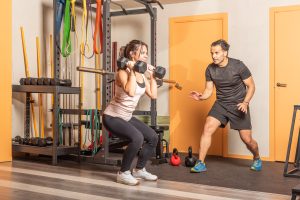
Below are examples of functional strength training exercises commonly used to improve everyday movement capacity.
Sit-to-Stand (Chair Squats)
- Trains leg and core strength
- Mimics standing up from a seated position
Step-Ups
- Builds leg strength and balance
- Reflects stair climbing and elevation changes
Carry Movements (Farmer Carries)
- Improves grip strength and posture
- Transfers directly to carrying daily loads
Push and Pull Movements
- Supports upper-body strength for reaching and pulling
- Encourages coordinated core engagement
Rotational Movements
- Improves trunk stability and coordination
- Supports twisting and turning actions in daily life
Together, these functional movement exercises help the body move efficiently, safely, and confidently.

Who Benefits Most from Functional Strength Training?
Functional strength training exercises are suitable for a wide range of individuals, including:
- Adults seeking sustainable strength
- Former athletes transitioning to long-term fitness
- Individuals focused on longevity and injury prevention
- Those recovering from movement limitations
Importantly, programs should always be tailored to the individual’s ability, movement history, and goals.

Functional Strength Training and Longevity
At its core, functional strength training supports long-term movement health. Ultimately, By maintaining strength, balance, and mobility, individuals are better equipped to stay active, independent, and confident as they age.
This aligns with Plus10 Life’s longevity-focused philosophy, where training is designed not just for short-term results, but for lasting quality of life.
Start Training for Real-Life Movement at Plus10 Life
If you want strength that improves how you move every day—not just how you perform in the gym—then functional strength training is essential.
At Plus10 Life, training programs are built around personalized assessments, science-based methods, and functional movement principles designed to support real-life performance and long-term health.
Book a consultation with Plus10 Life to experience functional strength training built for real-life movement and longevity.