A functional leg workout is not just about building stronger muscles. Instead, it focuses on developing strength, balance, and coordination that directly support how you move in everyday life. From standing up and climbing stairs to maintaining stability on uneven ground, strong and functional legs play a critical role in long-term mobility and independence.
What Is a Functional Leg Workout?
A functional leg workout trains the lower body through multi-joint, movement-based exercises rather than isolated machine movements. In practical terms, In practice, these workouts mirror real-world actions such as squatting, stepping, balancing, and carrying.
Rather than focusing on aesthetics alone, functional leg training emphasizes:
- Strength that transfers to daily activities
- Balance and coordination
- Controlled movement through natural ranges of motion
As a result, the body becomes better equipped to move efficiently and safely outside the gym.
Why Functional Leg Strength Matters for Balance
Strong legs are the foundation of balance and stability. However, in real-world movement, strength alone is not enough. Functional leg workouts combine strength with coordination and control, which plays a key role in preventing falls and maintaining confidence in movement.
According to the Centers for Disease Control and Prevention, falls are one of the leading causes of injury among older adults. Therefore, training programs that emphasize balance-focused leg movements are especially important as we age.
Key Benefits of a Functional Leg Workout
1. Improved Strength for Daily Movement
Functional leg exercises build usable strength that supports actions such as standing up from a chair, climbing stairs, and lifting objects. As a result, Over time this strength makes everyday tasks feel easier and more controlled.
2. Enhanced Balance and Stability
Because functional leg workouts often involve single-leg or offset movements which challenge balance and proprioception. Consequently, the nervous system adapts, improving coordination and reducing the risk of falls.
3. Better Joint Health and Mobility
Functional training encourages movement through natural ranges of motion. As a result, joints stay active, stiffness decreases, and long-term mobility improves. This aligns with mobility guidance from Harvard Health Publishing.
4. Support for Functional Fitness at Any Age
While functional leg workouts benefit individuals of all ages, in particular, they are particularly valuable for those focused on functional fitness for seniors. Maintaining lower-body strength and balance is key to staying independent and active later in life.

Best Functional Leg Workout Exercises
Below are examples of exercises commonly included in a functional leg workout. Each movement is chosen for its ability to improve strength, balance, and real-life movement capacity.
Sit-to-Stand (Chair Squats)
- Builds leg and core strength
- Mimics standing up from a seated position
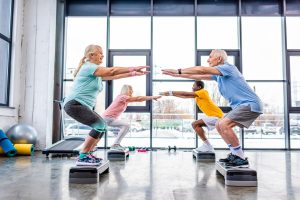
Step-Ups
- Improves leg strength and balance
- Reflects stair climbing and elevation changes
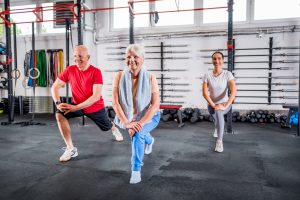
Split Squats
- Develops single-leg strength
- Enhances balance and coordination
Lateral Lunges
- Strengthens muscles used for side-to-side movement
- Supports stability in unpredictable environments
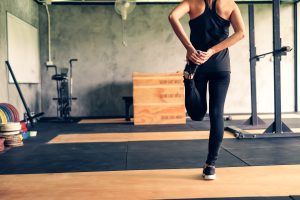
Single-Leg Balance Holds
- Trains balance and neuromuscular control
- Reinforces stability during daily activities
Together, these exercises form a balanced functional leg workout that supports strength, coordination, and confidence.
Functional Leg Workouts and Healthy Aging
Functional leg training plays a major role in healthy aging over time. By maintaining lower-body strength, balance, and coordination, individuals can move independently and avoid injuries more effectively.
Research highlighted by the National Institute on Aging emphasizes the importance of strength and balance training for older adults. Consequently, incorporating functional leg workouts into a regular routine supports both mobility and long-term health.
How Plus10 Life Approaches Functional Leg Training
At Plus10 Life, functional leg workouts are built around personalized assessments and science-based programming. In practice, rather than using one-size-fits-all routines. coaches tailor training plans to individual movement needs, goals, and ability levels.
This approach ensures that functional leg training remains safe, effective, and aligned with long-term performance and longevity goals.
Start Building Strength and Balance with Plus10 Life
If you want stronger legs, better balance, and improved confidence in everyday movement, then, a functional leg workout is essential.
Book a consultation with Plus10 Life to experience science-based functional training designed to support strength, balance, and long-term mobility.