Introduction: Why Functional Fitness for Seniors Is Essential for Aging Well
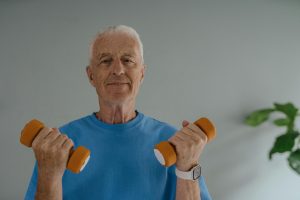
Aging well is not about avoiding movement; rather, it’s about training the right movements. Functional fitness for seniors focuses on strengthening the exact patterns used in everyday life, such as standing up, walking, reaching, balancing, and carrying.
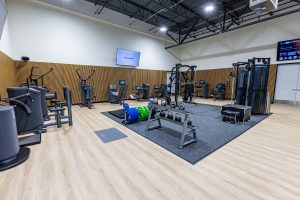
Compared with traditional gym workouts that isolate muscles, functional fitness instead trains the body as a coordinated system. This approach reflects Plus10 Life’s longevity-focused training philosophy, where movement quality, balance, and long-term health are prioritized. This approach helps older adults preserve independence, reduce injury risk, and support long‑term metabolic health, which are the key factors in extending healthspan, not just lifespan.
What Is Functional Fitness for Seniors?
In practice, functional fitness for seniors is a form of training emphasized throughout Plus10 Life’s training approach and focuses on:
- Multi‑joint, real‑world movements
- Balance and coordination
- Strength that transfers directly to daily activities
As a result, these exercises mimic everyday actions such as getting out of a chair, climbing stairs, or carrying groceries. Rather than focusing on aesthetics, the goal is life performance.
Key Benefits of Functional Fitness for Seniors and Active Aging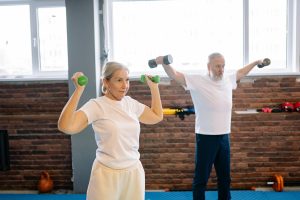
1. Functional Strength Training for Daily Life
Functional strength training builds usable strength, rather than just muscle size. Over time, and with consistent practice, seniors develop the ability to move confidently through daily tasks without reliance on support. This type of training is a core component of structured, age-appropriate training programs offered at Plus10 Life and designed to support safe progression and long-term independence.
2. Functional Fitness for Seniors: Balance and Fall Prevention
Importantly, falls are one of the most significant health risks associated with aging. According to the CDC, one in four adults aged 65 and older experiences a fall each year, making balance-focused functional training essential for injury prevention and long-term independence. In addition, functional movement exercises train balance, proprioception, and reaction control, helping seniors stay upright and confident.
3. Functional Movement Exercises for Mobility and Joint Health
When practiced regularly, functional movement keeps joints active and muscles engaged through natural ranges of motion; as a result, stiffness is reduced and mobility is preserved.
4. Positively Impacts Metabolic Health
Strength‑based movement plays a critical role in metabolic health by improving how the body uses energy and regulates blood sugar, as supported by research from the National Institute on Aging and reflected in Plus10 Life’s science-informed approach to movement and longevity (NIA – Exercise & Older Adults).
- Preserving lean muscle mass
- Improving insulin sensitivity
- Supporting healthy energy levels
Therefore, this makes functional fitness a powerful tool for long‑term longevity care, not just fitness maintenance.
Functional Fitness vs Traditional Exercise for Seniors
| Functional Fitness | Traditional Exercise |
|---|---|
| Trains daily movements | Focuses on isolated muscles |
| Improves balance & coordination | Limited balance challenge |
| Enhances independence | Limited real‑world transfer |
| Longevity‑focused | Performance or aesthetics‑focused |
Best Functional Fitness Exercises for Seniors
1. Sit‑to‑Stand (Chair Squats)
- Builds leg and core strength
- Directly supports independence
(Secondary keyword: functional strength training exercises)
2. Step‑Ups
- Improves balance and leg coordination
- Mimics stair climbing in daily life
3. Carry Movements (Light Weights)
- Trains grip strength and posture
- Transfers directly to daily tasks
4. Balance‑Focused Movements
- Single‑leg stands
- Controlled weight shifts
Consequently, these exercises improve neuromuscular control — a key factor in fall prevention, mobility, and confidence, especially when practiced consistently under professional guidance (Harvard Health – Balance Training).
Safety Guidelines for Seniors
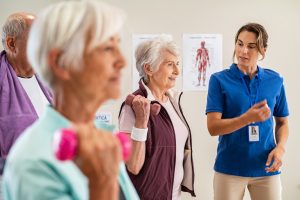
For safety and credibility, to maintain EEAT and Google’s health content standards:
- Always start with a professional assessment
- Progress gradually
- Avoid pain‑based movement
- Focus on control over intensity
Above all, functional fitness should feel empowering, not exhausting.
Functional Fitness for Seniors, Longevity, and Healthspan
At its core, functional fitness for seniors is not about adding years to life — instead, it’s about adding life to years. The World Health Organization emphasizes functional ability as a core pillar of healthy aging, reinforcing the importance of strength, balance, and movement quality (WHO – Healthy Ageing).
By improving strength, balance, and metabolic health, functional training therefore supports outcomes commonly targeted in modern longevity and healthspan programs, including:
- Independence in later years
- Reduced injury risk
- Sustained energy and confidence
This aligns directly with modern lifespan clinic and longevity care principles.
Why Plus10 Life Is Different
In practice, and with a longevity-first mindset, at Plus10 Life, functional fitness is delivered through:
- Science‑based assessments
- Personalized training plans
- Longevity‑focused programming
- A holistic view of metabolic and physical health
📍 Located in Flower Mound, TX, Plus10 Life bridges the gap between traditional fitness and advanced longevity care.
Build Strength That Supports You For Life
If you’re looking to stay strong, independent, and confident as you age, functional fitness is not optional – it’s essential.
➡️ Book a personalized functional fitness assessment at Plus10 Life and discover how science‑backed training can support your strength, balance, and longevity. You can also explore our full range of training services to see how we support long-term health and performance.