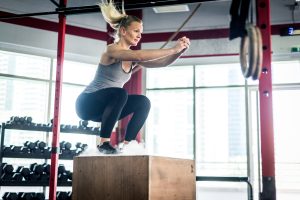
Functional strength training exercises for beginners focus on movements that build strength through real-life patterns such as squatting, pushing, pulling, and carrying. Instead of isolating muscles, this training improves coordination, joint stability, and movement efficiency. For beginners, functional strength training develops safe, usable strength that supports daily activities and long-term health.
What Functional Strength Training Exercises Are and How They Work
This training style focuses on movements that mirror real-world activities like lifting, reaching, walking, and stabilizing your body. For beginners, this approach emphasizes control, posture, and joint alignment rather than heavy weights or complex routines.
Unlike traditional machine-based workouts, this style of training works multiple muscle groups at once. This improves efficiency, reduces injury risk, and helps beginners build strength that carries over into daily life.
Why This Training Style Works Well for Beginners
Beginners often struggle with workouts that are either too complex or too isolated. This approach provides a structured way to build a strong foundation without overwhelming the nervous system.
By prioritizing functional movement exercises, beginners improve balance, coordination, and joint stability while gradually increasing strength. This approach supports long-term consistency rather than short bursts of unsustainable training.
Core Functional Movement Exercises Every Beginner Should Learn
Functional movement exercises are the foundation of functional strength training. These patterns should be mastered before progressing to heavier loads or advanced variations.
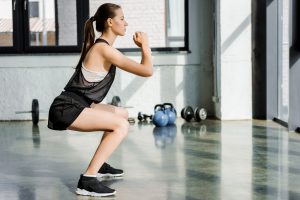
Squat-Based Functional Strength Training Exercises
Squatting teaches the body how to sit, stand, and lift safely. Beginner-friendly squat variations improve lower-body strength, core stability, and mobility.
Hinge-Based Functional Movement Exercises
Hinge movements train the hips and posterior chain. Learning how to hinge properly supports spine health and reduces injury risk during daily activities such as bending and lifting.
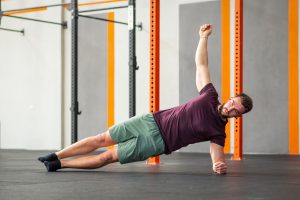
Push-Based Functional Strength Training Exercises
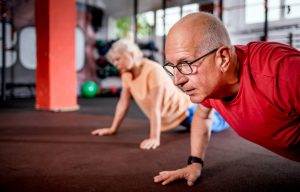
Pushing movements strengthen the chest, shoulders, and arms while reinforcing core stability. Wall push-ups and incline push-ups are effective functional strength training exercises for beginners.
Pull-Based Functional Movement Exercises
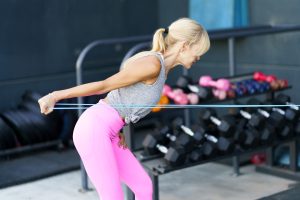
Pulling movements improve posture and upper-body strength. Rows using bands or light weights are accessible functional movement exercises that help balance pushing patterns.
Carry-Based Functional Strength Training Exercises
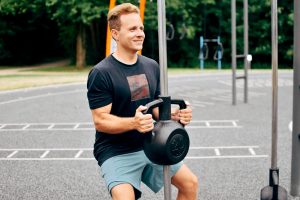
Loaded carries train grip strength, core stability, and overall coordination. Carrying light weights teaches beginners how to stabilize the body under load.
How Strength Training Improves Functional Movement
This type of strength training improves how muscles work together rather than in isolation. This leads to better movement efficiency, reduced compensations, and improved confidence during daily activities.
Research summarized by the American College of Sports Medicine (ACSM) shows that multi-joint strength training improves balance, mobility, and functional capacity, particularly in beginners and older adults.
A Beginner Framework for Functional Strength Training Exercises
A simple beginner framework includes two to three full-body sessions per week focused on movement quality. Each session should include one squat, one hinge, one push, one pull, and one carry, performed with light to moderate resistance and controlled tempo.
For beginners, these sessions should be performed two to three times per week with rest days in between. Repetitions should focus on quality movement rather than fatigue.
A simple structure includes full-body sessions that incorporate squats, hinges, pushes, pulls, and carries. This balanced approach allows beginners to develop strength without overtraining.
Common Beginner Mistakes and Training Myths
Functional Strength Training Myths Debunked
A common myth is that beginners need complex or high-intensity workouts to see results. In reality, mastering basic movement patterns leads to better strength gains and lower injury risk. Another misconception is that functional training replaces traditional strength work, when it actually builds a foundation for long-term progression.
One common mistake is progressing too quickly before mastering technique. Another is focusing on intensity instead of movement quality, which can limit results and increase injury risk.
A frequent misconception is that functional movement exercises must be complex. In reality, simple movements performed consistently are more effective for long-term progress.
Lifestyle Factors That Support Functional Strength Training for Beginners
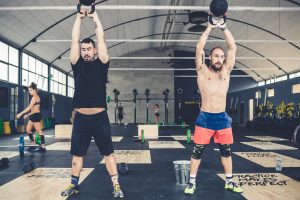
This type of training is most effective when paired with adequate recovery, proper nutrition, and sleep. These factors support muscle adaptation and reduce soreness.
Evidence reviewed by the National Strength and Conditioning Association (NSCA) highlights the importance of strength training and movement quality for long-term health and injury prevention.
Who This Training Approach Is Best For
This training approach is ideal for beginners, adults returning to exercise, and individuals looking to improve daily movement without high-impact workouts.
Who Should Modify Functional Movement Exercises
Individuals with joint pain, previous injuries, or mobility limitations should modify functional movement exercises and seek professional guidance to ensure safety and proper progression.
Final Thoughts on Functional Strength Training for Beginners
This approach provides beginners with a safe, effectiv By focusing on functional movement exercises and consistent practice, beginners can develop confidence and physical resilience.
For those seeking structured guidance, programs offered by Plus10 integrate functional strength training, coaching, and lifestyle support to help beginners build strength safely and sustainably.
Evidence-Based Resources
- American College of Sports Medicine (ACSM): Exercise guidelines, functional training, and beginner strength programming
- National Strength and Conditioning Association (NSCA): Resistance training, movement quality, and injury prevention
- World Health Organization (WHO): Physical activity guidelines and functional health
- Centers for Disease Control and Prevention (CDC): Strength training, physical activity, and healthy aging